Case Study

Deep Eutectic Solvent Lab Robot

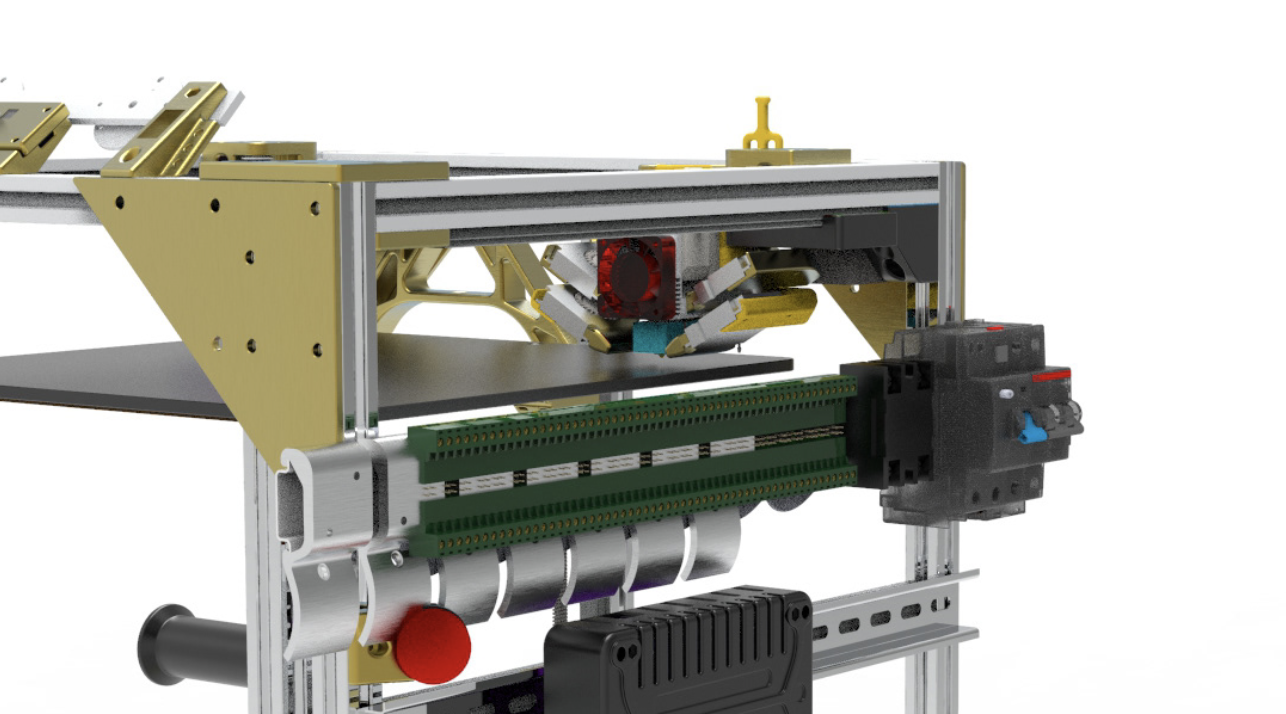
A repurposed 3D printer that now runs fully automated sampling, filtering, and dilution workflows for lead-recovery research.

Role

Robotics Engineer · Systems Lead

Timeline

2024 R&D Program

Stack

Python, Raspberry Pi, G-code, AAS/AES

Deep Eutectic Solvent sampling robot
Context

Solving viscous chemistry bottlenecks

Deep eutectic solvents (DES) promise cleaner battery recycling, but their viscosity makes dissolution experiments painfully slow and hard to reproduce.

Each run required days of mixing to reach steady state, so we needed a platform that could babysit reactions around the clock, capture time-resolved data, and keep the process safe inside a lab.

Goals

What we optimised for

  • High-throughput sampling to build spatial pollutant maps for AAS/AES analysis.
  • Repeatable control of dosing, agitation, and filtration parameters.
  • Full electrical certification so the system could run unattended in research facilities.
Process

Automated workflow

  1. Dispense lead solids into DES-filled vials with a hopper and end effector controlled by custom G-code.
  2. Run tuned stirring cycles, logging torque and time to capture reaction kinetics.
  3. Extract solvent plus residual solids via syringe, then push the mixture through a filtration stage.
  4. Micropipette precisely 20 microlitres into acid-filled vials, producing clean, dilution-ready samples.

The full loop runs in ~400 seconds—slower than hand pipetting, but far more consistent and traceable.

Control stack

Repurposed hardware, fresh brains

  • Modified 3D printer motion system now orchestrates linear axes, feeders, and custom tooling.
  • Python + Raspberry Pi supervise sequencing, safety interlocks, and sensor logging.
  • External electronics (pumps, valves, stirring motors) are driven through G-code extensions with checksum validation.

This let us keep commodity mechanics while layering a bespoke electronics and software stack on top.

Impact

Results in the lab

  • Generated consistent sampling schedules so DES performance can be compared across dozens of solvents.
  • Captured time-synchronised logs that align with AAS/AES concentration outputs for faster pollutant mapping.
  • Produced datasets that overlay on real-world site data, helping teams trace pollutant origins in hours instead of weeks.
Next up

Pushing throughput further

Current focus: parallelise the cell array, tighten fluidics tolerances, and integrate adaptive mixing schedules so we can accelerate solvent discovery and ultimately replace smelting-based recycling entirely.

Building lab automation?

Happy to share learnings on retrofitting motion platforms or designing solvent-safe robotics.